
In the modern landscape of scientific discovery, the ability to perceive and interpret complex data is as crucial as the experiments themselves. Traditional 2D graphs, charts, and computer screens often fall short when confronting phenomena that exist on scales both unimaginably small and staggeringly vast. This is where virtual reality (VR) enters as a transformative tool, offering researchers the ability to step inside data, walk around it, and manipulate it with an immediacy and clarity that flat screens simply cannot provide. By rendering molecules, weather patterns, or entire galaxies in three dimensions, VR provides a bridge between abstract information and intuitive understanding.

Rendering Molecules: Chemistry in Motion
For chemists and biologists, molecular interactions dictate everything from drug efficacy to the behavior of proteins. Traditional models, whether static 3D printed structures or on-screen renderings, can only hint at the dynamic relationships between atoms. In a VR environment, researchers can immerse themselves inside a molecule, observing atomic vibrations, chemical bonds forming and breaking, and the spatial choreography of complex structures. Interactive VR tools allow scientists to manipulate molecules in real time, testing hypotheses in a virtual lab space before committing to costly physical experiments. The immersive nature of VR also enhances collaboration, enabling teams across the globe to interact with the same molecular model as if they were sharing a physical laboratory.
Weather Systems: Navigating Chaos
Meteorologists and climate scientists confront data that spans continents and timescales. Simulating weather systems in VR transforms abstract datasets into navigable 3D structures, where cyclones spiral, air currents flow, and temperature gradients undulate in real time. Researchers can fly through a hurricane’s eye, follow jet streams across oceans, or witness climate model predictions unfold around them. This spatial comprehension allows scientists to detect patterns that might be invisible in conventional 2D visualizations, offering insights into storm formation, climate anomalies, and extreme weather prediction. By integrating VR with live satellite data, researchers can also conduct virtual “fieldwork” in environments that are too dangerous, remote, or costly to access in reality.
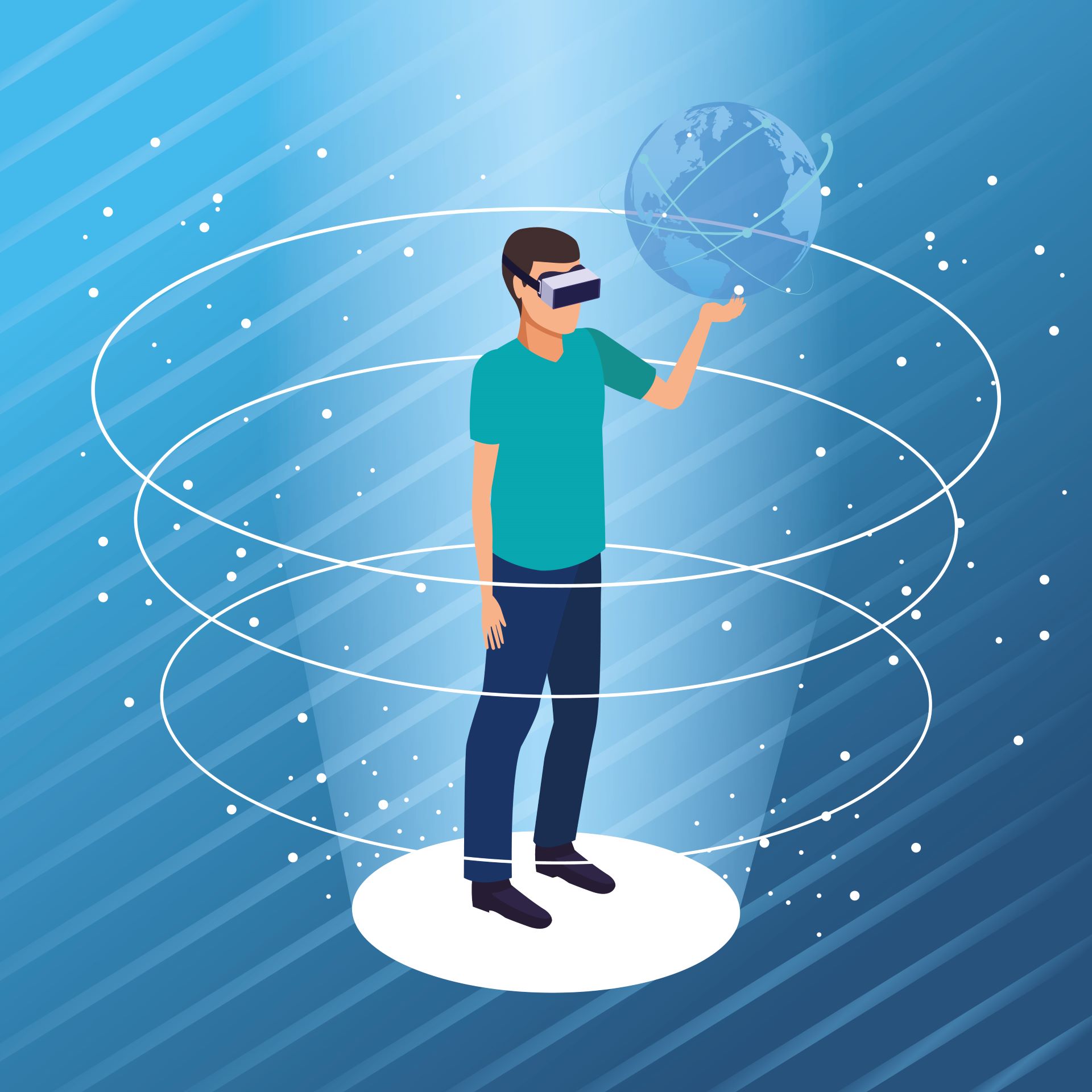
Astronomical Structures: Walking Among the Stars
Astronomy presents perhaps the ultimate challenge for visualization: vast scales that dwarf human experience. Stars, galaxies, nebulae, and black holes are impossible to intuitively grasp without immersive tools. VR allows astronomers to traverse a 3D representation of the universe, zooming from planetary systems to galactic superclusters, observing the relative positions and interactions of celestial bodies with unprecedented clarity. Simulations can incorporate gravitational forces, radiation patterns, and cosmic events like supernovae, giving researchers a visceral sense of scale and dynamics. Beyond research, this approach also revolutionizes science communication, offering students and the public an unparalleled opportunity to engage with the cosmos firsthand.
The Interdisciplinary Edge of VR Visualization
Scientific visualization in VR is not limited to any single field. Neuroscientists, engineers, geologists, and urban planners alike leverage VR to model complex systems. Neural networks can be represented as 3D brain structures, tectonic plate movements can be explored interactively, and urban traffic flows can be optimized through immersive simulations. The common thread is the ability to transform overwhelming datasets into comprehensible, navigable, and manipulable spaces, allowing researchers to think spatially, identify anomalies, and test scenarios in ways that were previously impossible.
Technological Foundations and Challenges
High-fidelity VR visualization relies on advanced rendering engines, precise motion tracking, and massive computational power. Realistic molecular dynamics or fluid simulations demand GPUs capable of rendering millions of particles at interactive frame rates. Sensor precision is critical for VR manipulation tools, ensuring that gestures translate accurately to scientific actions. Despite these capabilities, challenges remain, particularly in scaling VR solutions for collaborative research and ensuring accessibility across institutions. Standardization of VR data formats and integration with existing research software are ongoing areas of development.

Future Horizons
As VR technology continues to evolve, its role in scientific visualization is poised to expand. Machine learning and AI can be combined with VR to automatically highlight areas of interest within massive datasets, guiding researchers to discoveries faster. Cloud-based VR will allow geographically distributed teams to inhabit the same virtual lab simultaneously, breaking down barriers imposed by physical distance. The integration of haptic feedback suits, 3D audio, and multisensory simulations promises an even deeper level of immersion, turning data analysis into an almost tangible experience. Ultimately, VR is not just a tool for seeing the invisible—it is a gateway to understanding, interacting with, and manipulating the very fabric of complex scientific systems.
By transcending traditional visual limitations, VR empowers scientists to explore data in three dimensions, accelerating discovery, enhancing collaboration, and bringing the invisible into vivid, comprehensible reality. Whether navigating the molecular intricacies of life, the turbulent flows of Earth’s atmosphere, or the sprawling architecture of the cosmos, VR is redefining what it means to see, understand, and interact with the universe.