
When Data Becomes a Place
For decades, environmental awareness has been built on graphs, reports, and distant imagery. Rising temperatures, melting ice caps, shrinking forests. The information is clear, but the emotional connection often feels diluted, like reading about a storm from inside a sealed room.
Virtual reality changes that equation. It turns abstraction into presence. Instead of reading about environmental decline, users can stand inside it. They can walk across a bleached coral reef, hear the silence where biodiversity once thrived, or witness glaciers collapsing in real time. VR does not simply inform. It places the user inside the narrative, dissolving the distance between awareness and experience.
This shift is not cosmetic. It represents a fundamental transformation in how environmental education is delivered, understood, and acted upon.
From Observation to Immersion
Traditional environmental education relies heavily on observation. Whether through documentaries, textbooks, or digital media, the audience remains separate from the subject. There is always a screen, a frame, a boundary.
Virtual reality removes that boundary.
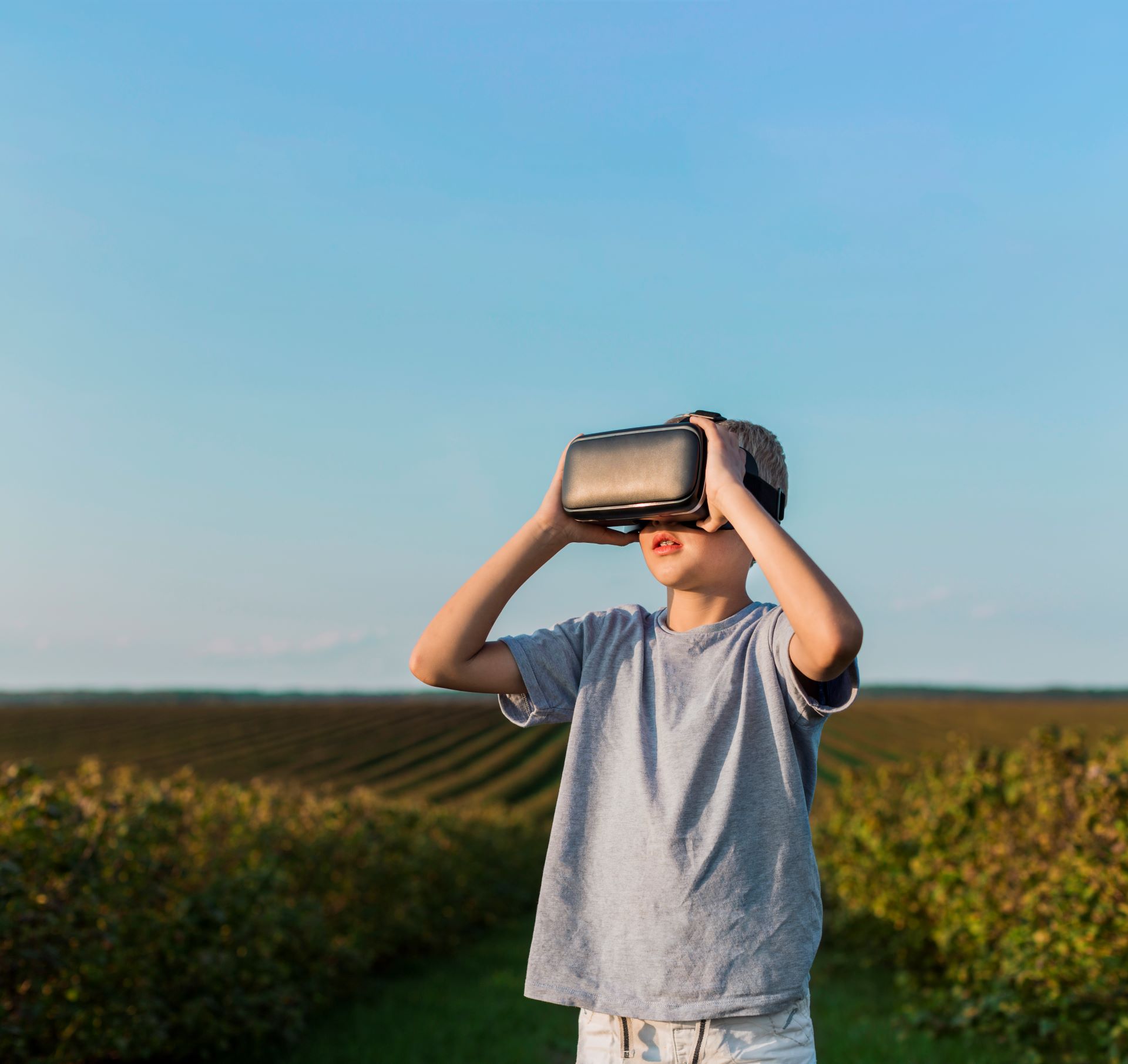
When a user puts on a headset, the environment is no longer “over there.” It surrounds them. Spatial audio, real-time rendering, and interactive elements create a sense of presence that traditional media cannot replicate. The brain responds differently to immersive environments. It processes them as lived experiences rather than passive content.
This distinction matters. Research consistently shows that emotional engagement drives behavioral change more effectively than factual knowledge alone. VR leverages this by transforming environmental issues into personal encounters.
A rising sea level is no longer a statistic. It becomes water creeping toward your feet.
Visualizing Climate Change in Real Time
Climate change is notoriously difficult to communicate because of its scale and complexity. It unfolds over decades, across continents, and through interconnected systems that are difficult to visualize.
Virtual reality excels at making the invisible visible.
Developers can simulate future scenarios based on climate models, allowing users to witness the long-term consequences of today’s actions. Cities can be rendered under different emission pathways. Forest ecosystems can evolve or collapse depending on environmental variables. Ocean temperatures can shift, altering marine biodiversity in ways that are immediately perceptible.
These simulations are not just speculative. They are grounded in real scientific data, translated into spatial experiences. Users can explore multiple outcomes, comparing a sustainable future with one shaped by inaction.
This ability to compress time and space into a single experience is one of VR’s most powerful contributions to environmental awareness.
Empathy as a Design Principle
Environmental issues often suffer from psychological distance. People tend to care more about immediate, local concerns than distant, global ones. Climate change, by its nature, can feel abstract and detached from daily life.
Virtual reality bridges this gap through empathy-driven design.
By placing users in affected environments, VR creates a sense of proximity. A user can stand in a drought-stricken landscape, walk through a wildfire aftermath, or experience flooding from a first-person perspective. These experiences are not just visual. They are sensory, emotional, and immersive.
Empathy becomes a tool, not just a byproduct.
This approach is particularly effective in highlighting the human dimension of environmental issues. VR experiences can include narratives from communities directly impacted by climate change, allowing users to hear stories, witness challenges, and understand the lived realities behind the data.
The result is a deeper, more personal connection to environmental issues.
Reimagining Environmental Education
Education systems have long struggled to make environmental topics engaging and impactful. While the importance of sustainability is widely recognized, the methods of teaching it often fail to inspire meaningful engagement.
Virtual reality introduces a new paradigm.
Instead of learning about ecosystems through diagrams, students can explore them in immersive detail. They can observe how different species interact, how environmental changes ripple through ecosystems, and how human actions influence these dynamics.
This experiential learning approach enhances comprehension and retention. Concepts that might be difficult to grasp through traditional methods become intuitive when experienced directly.
Moreover, VR allows for safe exploration of otherwise inaccessible environments. Students can dive into deep oceans, traverse remote rainforests, or explore polar regions without leaving the classroom.
The technology transforms education from a passive process into an active journey.
Digital Twins of the Natural World
One of the most compelling applications of VR in environmental awareness is the creation of digital twins. These are highly detailed virtual replicas of real-world environments, built using data from satellites, sensors, and field research.
Digital twins allow users to explore ecosystems with unprecedented accuracy.
Forests can be mapped tree by tree. Coral reefs can be reconstructed in intricate detail. Urban environments can be modeled to analyze the impact of infrastructure on local ecosystems.
These virtual environments serve multiple purposes. They are educational tools, research platforms, and advocacy instruments. Users can interact with these spaces, test scenarios, and observe outcomes in real time.
For example, a digital twin of a coastal city can simulate the effects of rising sea levels, storm surges, and urban development. Policymakers, educators, and the public can explore these scenarios together, fostering a shared understanding of potential risks and solutions.
Storytelling in Three Dimensions
Storytelling has always been a powerful tool for raising awareness. Virtual reality enhances storytelling by adding depth, presence, and interactivity.
In VR, stories are not just told. They are experienced.
Users can move through environments, interact with elements, and influence the narrative. This creates a sense of agency, making the experience more engaging and memorable.
Environmental storytelling in VR often combines scientific data with human narratives. A user might follow the journey of a displaced community, explore the changing landscape around them, and witness the broader environmental context.
This layered approach allows for a more nuanced understanding of environmental issues. It connects the macro-level phenomena with micro-level experiences, creating a holistic narrative.
Behavioral Change Through Experience
Awareness alone is not enough. The ultimate goal of environmental education is to inspire action.
Virtual reality has shown promise in influencing behavior by creating experiences that resonate on a personal level.
When users experience the consequences of environmental degradation firsthand, they are more likely to reconsider their own actions. This can lead to changes in consumption habits, energy use, and overall environmental responsibility.
The impact is not limited to individuals. VR experiences can be used in corporate training, policy discussions, and community engagement initiatives. By aligning stakeholders around a shared experience, VR can facilitate more informed and collaborative decision-making.
Challenges and Limitations
Despite its potential, VR is not without challenges.
Accessibility remains a significant barrier. High-quality VR experiences require specialized hardware, which may not be widely available, particularly in regions where environmental education is most needed.
There are also technical limitations. Creating realistic, data-driven environments requires significant resources, including advanced software, skilled developers, and high-quality data inputs.
Another consideration is the risk of oversimplification. While VR can make complex systems more understandable, there is a danger of reducing nuanced issues into simplified narratives. Ensuring accuracy and depth is essential.
Ethical considerations also come into play. Immersive experiences can be emotionally intense, and designers must balance impact with sensitivity.
The Future of VR in Environmental Awareness
The trajectory of VR technology suggests that its role in environmental awareness will continue to expand.
Advancements in hardware are making VR more accessible and affordable. Improvements in graphics, processing power, and connectivity are enabling more sophisticated experiences. Integration with other technologies, such as artificial intelligence and real-time data streaming, is opening new possibilities.
In the future, VR experiences could be continuously updated with live environmental data, allowing users to explore dynamic, evolving ecosystems. Collaborative virtual spaces could bring together users from around the world to explore and address environmental challenges collectively.
The line between simulation and reality will continue to blur, creating opportunities for deeper engagement and understanding.

A New Kind of Awareness
Virtual reality does not replace traditional forms of environmental education. It enhances them. It adds a layer of experience that transforms knowledge into something tangible, something felt.
In a world where environmental challenges are increasingly urgent, the ability to connect people to these issues on a deeper level is invaluable.
VR offers a way to step inside the story of our planet. To witness its fragility, its complexity, and its resilience. To move from awareness to understanding, and from understanding to action.
It is not just about seeing the invisible. It is about feeling it.