

The workplace as we know it is evolving faster than ever. Traditional offices are giving way to hybrid setups, and entirely remote teams are now commonplace. Yet, even with high-speed internet and video conferencing tools, the experience of working remotely often lacks the richness of in-person collaboration. Enter virtual reality (VR), a technology once associated primarily with gaming, now redefining what it means to “go to work.” VR offers immersive virtual offices where teams can meet, brainstorm, and collaborate as if they were in the same physical space. Beyond novelty, VR has the potential to address productivity, presence, and human factors in ways that conventional tools cannot.
The Rise of Virtual Offices
The concept of virtual offices is not new, but VR takes it to an entirely different level. Unlike flat video calls or 2D collaboration apps, VR recreates a spatial environment where users can interact naturally. Teams can walk through a virtual office, gather around digital whiteboards, or even share prototypes in 3D. The sense of co-location—critical for trust, creativity, and spontaneous conversation—is restored in a digital form.
For multinational corporations, VR offers an elegant solution to geographical fragmentation. Employees can inhabit the same virtual space regardless of whether they are in New York, Johannesburg, or Tokyo. This capability allows companies to unify global teams, making collaboration seamless and reducing the cognitive load associated with constant context switching across digital platforms.
Presence and Engagement in VR
One of the most significant challenges of remote work is the loss of human presence. While video calls allow for facial expressions and tone of voice, they cannot replicate body language or spatial awareness. VR addresses this by creating avatars and interactive environments that mimic real-world dynamics. Subtle gestures, eye contact, and spatial positioning become part of the communication process.
Studies in human-computer interaction suggest that the perception of presence in VR enhances engagement and focus. When employees feel “there,” they are more likely to participate actively in meetings, offer ideas freely, and remain attentive during collaborative sessions. This presence effect not only improves productivity but also fosters stronger social bonds and psychological safety among team members.
Productivity Gains Through Immersive Collaboration
Beyond social and psychological benefits, VR can significantly impact productivity. Traditional remote work often leads to fragmented attention and endless task-switching. VR minimizes these distractions by creating a dedicated, immersive workspace. Features like virtual breakout rooms, shared project boards, and 3D models allow teams to work faster and more efficiently.
In creative fields such as architecture, industrial design, or game development, VR enables real-time collaboration on complex 3D projects. Team members can manipulate virtual objects, annotate designs, and simulate real-world interactions instantly. The immediate feedback loop reduces misunderstandings and accelerates decision-making, making VR a practical tool for high-stakes, creative, or technical work.
Human Factors and Ergonomics in VR Workspaces
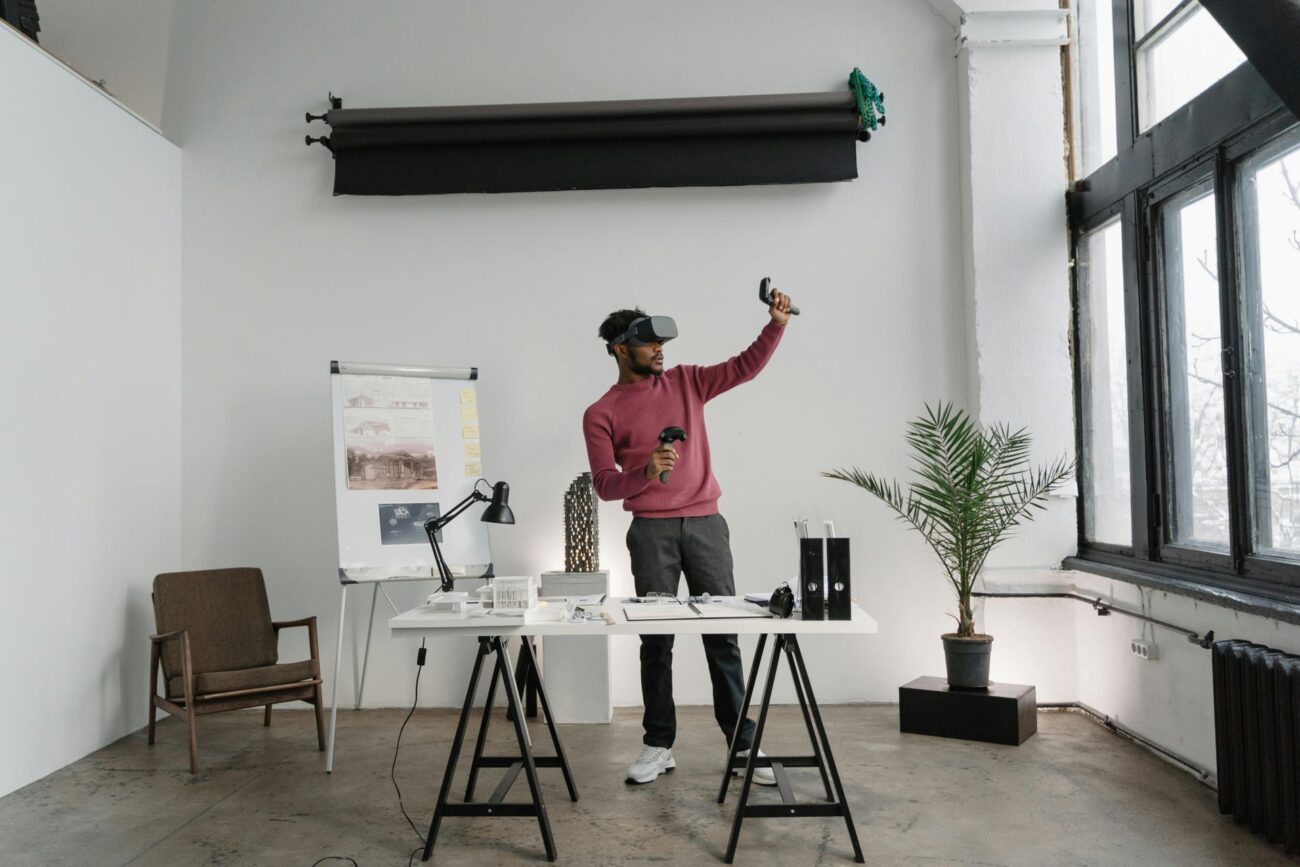
Adopting VR for work requires careful attention to human factors. While immersion offers immense benefits, extended sessions can lead to fatigue, eye strain, or motion discomfort. VR designers and companies must prioritize ergonomics, including optimal session lengths, adjustable avatars, and intuitive interface design.
Moreover, VR offers opportunities to enhance inclusivity. Virtual environments can be tailored for accessibility, allowing team members with mobility constraints to navigate and contribute fully. Sound design, spatial audio, and haptic feedback further enrich the user experience, bridging the gap between the physical and digital worlds.
Collaboration Beyond the Screen
The strength of VR lies in its ability to make remote collaboration feel tangible. Digital tools often compartmentalize interaction into meetings, emails, and chat threads. VR transcends this fragmentation, allowing teams to inhabit the same space continuously, encouraging serendipitous interactions and informal exchanges that drive innovation.
For example, a virtual “watercooler” space can mimic spontaneous hallway conversations. Employees can discuss projects casually, brainstorm new ideas, or provide mentorship in ways that feel natural. This humanization of remote work can prevent isolation, improve job satisfaction, and strengthen team cohesion over time.
Challenges and Considerations
Despite its promise, VR collaboration is not without challenges. High-quality VR hardware can be expensive, and bandwidth requirements are substantial. Organizations must also address cybersecurity concerns, as sensitive corporate data is transmitted and rendered in virtual environments.
Adoption also depends on cultural readiness. Teams accustomed to traditional office settings may initially resist VR work, requiring thoughtful change management and training. However, early adopters report that once the novelty wears off, the productivity and engagement gains become self-evident.

The Future of Work is Immersive
VR is poised to transform how we define “workplace.” As the technology matures, integration with artificial intelligence, cloud computing, and digital twins will create even more sophisticated virtual work environments. Imagine AI-assisted meetings, predictive workflow tools, and fully customizable virtual offices that adapt dynamically to team needs.
In this vision of the future, physical location becomes irrelevant. Teams collaborate seamlessly, creativity flourishes, and productivity is optimized without sacrificing the human connections that make work meaningful. The office of tomorrow may not have walls, desks, or even windows—but it will be as engaging, dynamic, and human-centered as any physical space.
Remote collaboration in VR represents more than a technological upgrade; it is a paradigm shift in how we conceptualize work, presence, and productivity. By addressing human factors, fostering engagement, and enabling immersive collaboration, VR has the potential to redefine the modern workplace. Organizations that embrace this shift today are not only investing in efficiency but also in the future resilience, creativity, and cohesion of their teams. The era of the virtual office is here—and it promises to make work both more connected and more human.